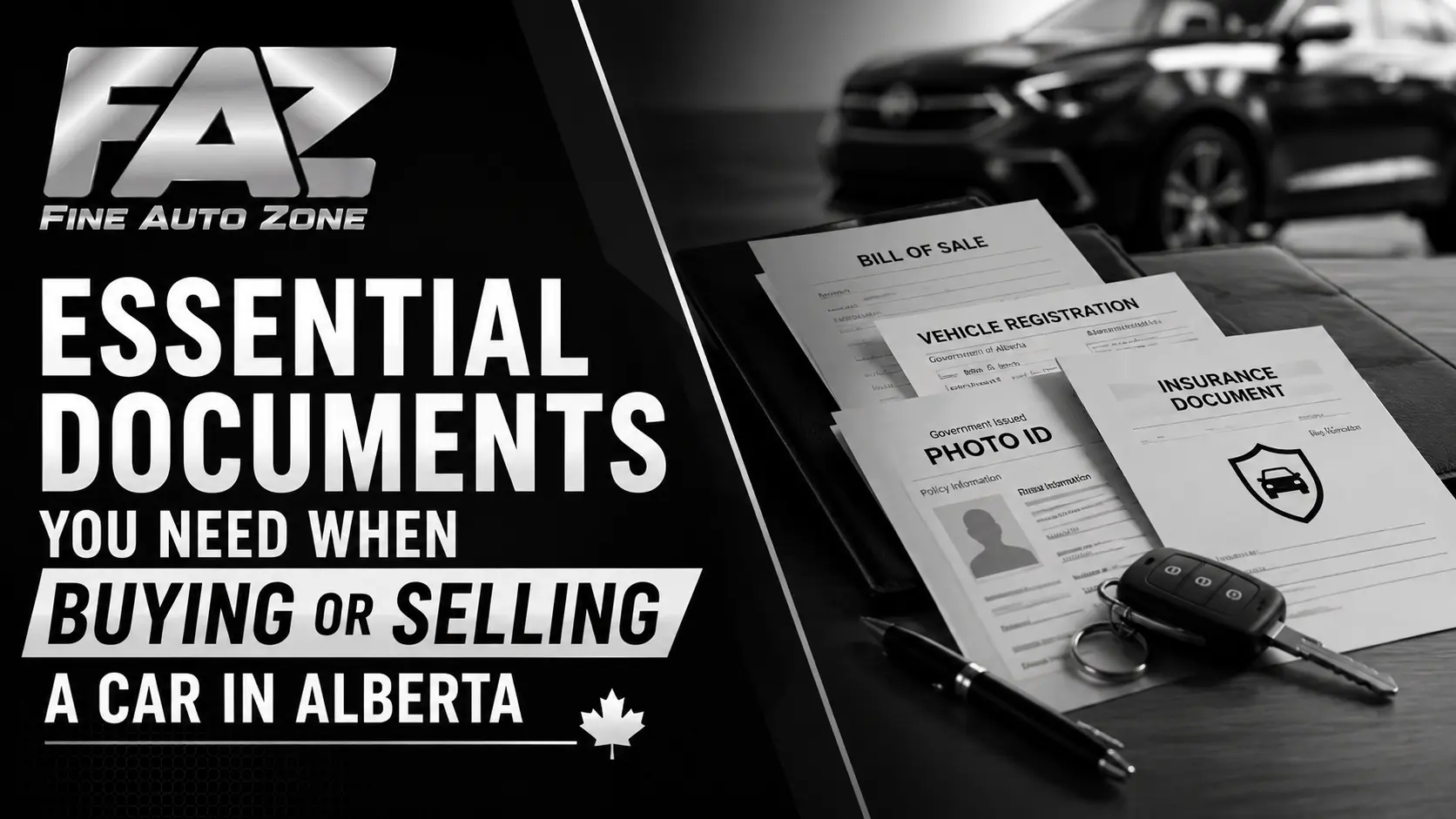
Whether you’re purchasing your first used car or selling your current vehicle, having the right paperwork is essential. Missing documents can delay registration, create legal issues, or even put a sale at risk. In Alberta, both buyers and sellers have specific responsibilities when transferring vehicle ownership.
At Fine Auto Zone, we regularly help Calgary drivers navigate the buying and selling process. This guide explains the key documents you need, common mistakes to avoid, and how to make the transaction as smooth as possible.
Why Proper Documentation Matters
Vehicle ownership transfers involve more than simply handing over the keys. Proper documentation protects both parties by creating a clear record of the transaction and ensuring that registration, insurance, and financing requirements are met.
Proper documentation helps:
- Verify legal ownership of the vehicle
- Protect buyers from fraud or undisclosed liens
- Provide proof of the agreed sale price and date
- Ensure the vehicle can be registered and insured without delays
Whether you buy from a dealership or a private seller, keeping accurate records is an important part of responsible vehicle ownership.
Documents Required When Buying a Used Car in Alberta
Bill of Sale
A bill of sale is one of the most important documents in any vehicle transaction. It serves as proof that the sale took place and outlines the terms of the agreement.
A proper bill of sale should include:
- Full names and addresses of the buyer and seller
- Vehicle make, model, year, and VIN (Vehicle Identification Number)
- Odometer reading
- Purchase price
- Date of sale
- Signatures of both parties
Without a properly completed bill of sale, ownership transfer can become more complicated and may create issues during registration.
Vehicle Registration Certificate
Ask the seller for the current vehicle registration certificate. This confirms that they are the registered owner and helps you verify that the VIN matches the vehicle you’re purchasing.
Always compare the VIN listed on the registration document with the VIN displayed on the vehicle. Even a small discrepancy should be investigated before completing the purchase.
Proof of Insurance
Before registering the vehicle in Alberta, you must obtain valid auto insurance. Most insurance providers can issue proof of insurance before you complete the registration process.
Obtaining insurance in advance helps ensure a smooth ownership transfer and allows you to legally operate the vehicle immediately after registration.
Government-Issued Identification
You’ll need valid identification, such as a driver’s license, passport, or Alberta ID card, when registering the vehicle and completing financing paperwork if applicable.
Keeping your identification current can help avoid delays when finalizing ownership documents.
Vehicle History Report
A vehicle history report ( CARFAX Report ) is not legally required, but it is one of the most valuable documents a used car buyer can review before making a purchase.
A vehicle history report can reveal:
- Previous accidents or damage
- Outstanding liens
- Ownership history
- Insurance claims
- Registration records
Reviewing this information allows buyers to make informed decisions and avoid unexpected issues after the purchase.
Documents Required When Selling a Used Car in Alberta
Current Vehicle Registration
As the seller, you should provide the vehicle’s current registration certificate to confirm ownership and help the buyer verify the vehicle’s information.
Providing accurate ownership documents helps establish trust and can speed up the transaction.
Bill of Sale
A bill of sale protects both the buyer and seller by documenting the transaction. It should clearly state the vehicle information, sale price, date of sale, and contact information for both parties.
Keep a copy of the signed bill of sale for your records after the sale is completed.
Maintenance and Service Records
Providing maintenance and service records can increase buyer confidence. Records showing regular oil changes, inspections, tire replacements, and repairs demonstrate that the vehicle has been properly maintained.
Well-documented maintenance history often makes a vehicle easier to sell and may support a stronger selling price.
Vehicle History Report
Providing a recent vehicle history report demonstrates transparency and can answer many of the questions buyers typically have during the purchasing process.
A clean history report may help reduce buyer concerns and make negotiations more straightforward.
Loan Payoff Documentation
If there is an outstanding loan on the vehicle, provide documentation showing the remaining balance and the steps required to release the lien once the loan is paid off.
Being upfront about any existing financing obligations helps avoid complications and ensures a smoother ownership transfer.
Additional Documents That Can Make the Process Easier
Although not always required, several documents can help simplify the buying or selling process.
Warranty Documentation
If the vehicle still has manufacturer warranty coverage or an extended warranty, provide the related documents. Buyers often appreciate knowing what coverage remains after the purchase.
Owner’s Manual
The owner’s manual provides important information about vehicle operation, maintenance schedules, and safety features. Including it with the sale can improve the buyer’s experience.
Inspection Reports
Recent inspection reports can provide additional confidence regarding the condition of the vehicle. They may also help identify any maintenance that has recently been completed.
Financing Documents
When financing is involved, keeping copies of loan agreements and related paperwork can help both parties understand the terms and obligations associated with the transaction.
Common Documentation Mistakes to Avoid
Missing Signatures
One of the most common mistakes is failing to obtain signatures from both the buyer and seller. Unsigned documents may not provide the legal protection intended.
Incorrect Vehicle Information
Double-check all details, including the VIN, make, model, year, and odometer reading. Errors can create delays during registration and ownership transfer.
Failing to Verify the VIN
The VIN should match across all documents and the vehicle itself. Verifying this information helps prevent fraud and administrative issues.
Ignoring Outstanding Liens
Purchasing a vehicle with an unresolved lien can create significant complications. Buyers should verify whether any loans remain attached to the vehicle.
Not Keeping Copies
Both parties should keep copies of all signed documents, including the bill of sale, registration paperwork, and financing records. These documents may be needed in the future for legal or administrative purposes.
Dealership Purchase vs. Private Sale
Buying Through a Dealership
When purchasing from a licensed dealership such as Fine Auto Zone, much of the paperwork is handled for you. Dealerships typically assist with preparing sales documents, verifying ownership information, arranging financing, and providing vehicle history details.
This can save buyers time and reduce the risk of documentation errors.
Buying Through a Private Seller
In a private sale, the buyer is generally responsible for verifying the vehicle’s history, checking for liens, reviewing ownership documents, and ensuring all paperwork is completed correctly.
While private sales may offer flexibility, they require greater attention to documentation and due diligence.
How Fine Auto Zone Helps Simplify the Process
At Fine Auto Zone, we understand that buying a used car involves more than selecting the right vehicle. Proper documentation is an important part of ensuring a smooth and successful transaction.
Our team helps customers by:
- Providing complete sales documentation
- Offering vehicle history transparency
- Assisting with financing applications
- Supporting trade-in transactions
- Answering questions throughout the buying process
We strive to make the experience straightforward, transparent, and stress-free for every customer.
Final Thoughts
Having the right documents is essential when buying or selling a car in Alberta. From the bill of sale and registration certificate to insurance and vehicle history reports, each document plays an important role in protecting both parties and ensuring a smooth ownership transfer.
Taking the time to verify paperwork, maintain accurate records, and understand your responsibilities can help prevent costly mistakes and unnecessary delays.
If you’re looking for quality used cars in Calgary and guidance throughout the buying process, Fine Auto Zone can help. Our team is committed to helping drivers find the right vehicle while making the paperwork and ownership transfer process as simple as possible.
Frequently Asked Questions
What documents do I need to register a used car in Alberta?
You generally need a bill of sale, the vehicle registration certificate, proof of insurance, and valid government-issued identification.
Is a bill of sale required in Alberta?
Yes. A bill of sale is an important legal document that records the details of the transaction and helps protect both the buyer and seller.
Do I need a vehicle history report when buying a used car?
While not legally required, a vehicle history report is strongly recommended because it can reveal accidents, liens, and ownership history.
Can I sell a car in Alberta if there is still a loan on it?
Yes, but the outstanding loan must be addressed. Sellers should provide payoff information and arrange for the lien to be released once the loan is paid.
How do I transfer ownership of a vehicle in Alberta?
The buyer and seller complete a bill of sale, the buyer obtains insurance, and the vehicle is registered at an Alberta registry office using the required documents.
